
Beaver: Master Ecosystem Engineers
Imagine the mountain stream closest to you, all of it teeming with pollinators, native insects, birds, fish, and plants you never even knew existed...
Note: BEAVER BIBLIOGRAPHY follows this post
by Pam Sherman
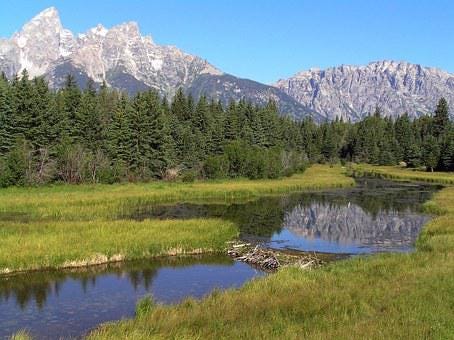
Imagine the mountain creek nearest you, all of it teeming with a biodiversity of pollinators, native insects, birds, fish, and plants you never knew existed, bordered by fast-growing willows, alders, aspen, and other riverine plants. Here, rivers and streams do not rush furiously in a single gully-like channel to the sea; rather, they meander on their floodplains, saturating soils, bringing this paradise to life from mountain headwaters down to their valleys.
According to Colorado experts such as Colorado State University Professor Ellen Wohl in Saving the Dammed, Ecometrics’ Mark Beardsley, and many others, this is what you would have seen in the land we know as Colorado (and all over the West) thanks to beaver eco-engineers before intensive beaver trapping and the following heavy colonization here. See this interactive from the High Desert Museum; click and drag to explore the differences.
The History of Beaver in North America
Beaver used to live in almost every year-round stream in America. (Those within the beaver community often use 'beaver" as plural instead of the colloquial "beavers"). In some locales, they were able to live for hundreds if not thousands of years. In others, they moved on when their favorite food became scarce. Abandoned ponds and complexes filled in, becoming fertile soil which would later delight settlers, who had beaver to thank for much rich farmland. Most settlers did not realize beaver were their benefactor.
Beaver fur was so valuable for hats back in Europe, which had harvested its own beavers to extinction by the 1600s, that it literally became the coin of the realm (see Frances Backhouse’s Once They Were Hats). Trapping in the 1800s all over the West all but eliminated the beaver here, as it did in the rest of the U.S. and Canada. 60 to 400 million beaver reputedly lived and worked in what is now the U.S. before trapping. Beaver DNA was found in sediment from 7,250 years ago.
They have rebounded to an estimated 10-15 million in the US right now, mostly in wetter areas. There are some ideal beaver-inhabited locales in Colorado, but few and far between. What keeps beaver from reaching their previous numbers and re-hydrating our parched landscapes and native habitat? Roads, development, development, development, habitat fragmentation, water diversions, pollution, the view of beaver as a nuisance animal, old trapper laws, and fear that beaver are stealing water from humans.
Beaver Restoration and Climate Change
Completed and ongoing scientific studies and successful recent restoration projects all over North America are providing context to deal with these fears. See the book Eager: The Surprising, Secret Life of Beavers and Why They Matter by Ben Goldfarb, a well-researched page-turner on this topic, the gateway book for many to the world of beaver restoration for endangered amphibians, salmon and other fish, insects, plants, landscapes by helping to keep the water where it falls. It has been found that beaver are recharging groundwater, raising the water table, and helping humans access more water than we are used to in this dry climate.
Especially now with wildfires raging everywhere, experts are studying this topic. They have learned that beaver meadow complexes create refuges for all kinds of species during intense wildfire. See this video called Smokey the Beaver featuring Prof. Emily Fairfax (CU Boulder PhD) and her research. Here is the 45-second version. Beaver can do so anywhere they are allowed to live, urban or rural.
Modern beaver living near humans do unwittingly eat favorite trees or flood roads. (Beaver look at culverts and say, “how nice that someone built me this excellent dam! It has only one little defect in it, this big round hole, and I can fix that.”) However, modern humans are equal to the task of outsmarting them so both can co-exist peacefully. For an intro, See Coloradan Nichole Fox’s intro here. Then see Skip Lyle’s Beaver Deceiver website or Mike Callahan’s Beaver Solutions site. Or this short video on Denverite Sherrie Tippie, veteran beaver relocator in Colorado.
Support Beaver in Colorado!
The Colorado Beaver Working Group “is a collaborative space for making connections between practitioners, landowners, groups, agencies, and individuals working to promote beaver as a natural way to restore streams and wetlands for the benefit of people, plants, and wildlife.” It’s the hub for what’s happening beaver-wise in Colorado and nearby.
This group is now blossoming prolifically. Natural resource professionals such as Ashley Hom, a USFS Gunnison National Forest hydrologist, are implementing programs to bring back the beaver. Watch her presentation at the first Colorado Beaver Summit here. Click here for the range of Colorado Beaver Summit presentation recordings. Nicole Fox, a beaver educator in Durango, founded and runs Give a Dam, an organization dedicated to beaver restoration and education, whose motto is “in beavers we trust.”
Don’t miss this article on ranchers, farmers, climate change, water harvesting and beavers. Everyone working on beaver restoration as a nature-based solution is busy as the proverbial beaver.
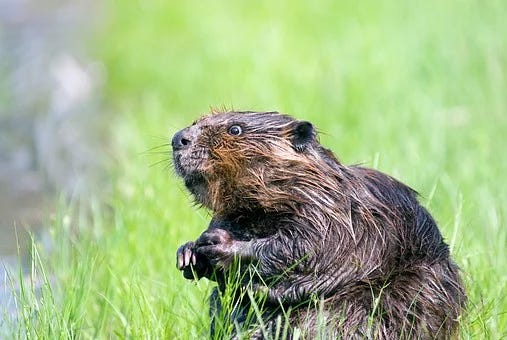
Courtesy of Steve Raubenstine at Pixabay
Beaver Bibliography
Websites Books Videos Articles Reports/Guides
Topic: Beaver restoration as a Nature-Based Climate Mitigation Solution, wrt drought, wildfire, soil moisture storage, stream restoration. Beaver biology, ecology, social life, history, mitigation of conflict with people.
WEBSITES
Beaver Info around the West:
Ecometrics Colorado lots of learning on PBR (Process-based Restoration) and beavers
Montana Beaver Working Group–excellent info–see most recent newsletters.
Colorado Beaver Summit 2021 website. Click on Research for presentations: Colorado Beaver Summit Presentations …give it a few seconds to load
Colorado Beaver Working Group–basic info and the place to join the CBWG working group
Montana Beaver Working Group–excellent info
Worth a Dam, Martinez CA Beavers – Heidi Perryman’s site bursting with info including for K-12
Give a Dam, Durango great photos, great education and restoration organization
Tulalip Tribes Beaver Program–in WA, inspiring
Beaver Restoration Assessment Tool–BRAT The tool for this purpose
Beaver Ecology and Relocation Center University of Utah– a center of action to “give beaver a dam!”
Bring Back the Beaver Campaign in California–central website of those who have been working on this for two decades, with success
Beaver Conflict Management:
Sherrie Tippie, Beaver relocator in Denver – her work as beaver relocator is legendary. Article on Sherrie Tippie
Beaver Institute–beaver conflict management trainings, climate change beaver coalition, beaver as nature’s firefighters and much more for the East Coast and everywhere else
Beaver Deceivers–website of Skip Lyle, legendary pioneer of beaver-human conflict mitigation, inventor of the beaver deceiver. Lots of info here.
The Beaver Believers arcgis storyboard. Nicely done.
Beaver Coalition, where the Beaver Restoration Guide is stored
BOOKS
All highly recommended
Backhouse, Frances. Once They Were Hats: In Search of the Mighty Beaver–history, including Canadian.
Goldfarb, Ben. Eager: The Surprising, Secret Life of Beavers and Why They Matter–this will clue you in on the beaver scene today, especially in the West. award-winning writing.
Hood, Glynnis. The Beaver Manifesto–small book, big learning.
Mills, Enos. In Beaver World–published in 1913 wrt Estes Park beavers. A must-read for eyewitness accounts.
Ryden, Hope. Lily Pond: Four Years with a Family of Beavers–CSU professor Ellen Wohl wrote that she wished every American could read this book. Ryden sat on the banks of Lily Pond observing a family of beavers for four years. This is what she observed of their family saga. Agreed, a must-read.
Wohl, Ellen. Something Hidden in the Ranges (important background, riveting writing.)
Wohl, Ellen. Virtual Rivers: Lessons from the Mountain Rivers of the Colorado Front Range (important background for Front Rangers and beyond.)
Wohl, Ellen. Saving the Dammed: Why We Need Beaver-Modified Ecosystems
Quintessential beaver ecology for Coloradans and beyond.
VIDEOS
Good ones… and more are available on Youtube:
Beavers and Wildfire: A stop-motion story
Prof. Emily Fairfax’s 45 second stop-motion animation of beavers as wildfire mitigators
Smokey the Beaver: Can Beaver Dams Help Protect Riparian Vegetation During Wildfire Presentation by Dr. Emily Fairfax, ecohydrologist to the USFS. A must-see on this topic.
Short on Water in the Mountains? Beavers to the Rescue –interview with Julianne Scamardo, beaver researcher, CSU
When in Drought, Call the Beavers , from CU Boulder's Water Desk about beaver work in our area. For a followup to this story a few months later: A Day in the Life of a Wildlife Biologist by Dave Hoerath in the Boulder County Parks and Open Space publication, Images.
Colorado Beaver Summit Presentations In particular, catch Gunnison National Forest Hydrologist Ashley Hom’s presentation here
Then check out the newspaper article Leave it to Beavers: Rodents Win Over Gunnison Valley Land Managers
Idaho Rancher Restores Beavers to Birch Creek
Beavers on Working Lands – on ranches and agriculture
Partnering with Beaver to Restore CO Mtn Riverscapes Mark Beardsley of Eco-Metrics Colorado
Beaver Institute’s Youtube Channel with videos of presentations from the 2022 Conference
Beaver Believer documentary great work; behind a paywall
Beaver Interactive Exhibit from the High Desert Museum. A favorite of beaver students of all ages.
ARTICLES (also see websites above for articles)
How Beavers Fight Drought and Wildfire from 350Colorado Newsletter–lots of links
Beaver Dams Help Wildfire-Ravaged Ecosystems Recover Long after Flames Subside Scientific American, Feb 7, 2022
How Beavers Became North America’s Best Firefighter from National Geographic
Mesa Verde National Park sees beavers as a restoration tool
Beavers could be Colorado's secret weapon to cleaning rivers and abandoned mines
Restoring California’s Wetlands and Fighting Climate Change? Leave it to Beavers
Beavers support freshwater conservation and ecosystem stability
Wetlands Filter and Enrich the Landscape– wetlands save the day during flood in VT
Beavers as Wetland Ecosystem Engineers from Natural Resources Defense Council
Leave it to Beavers: Rodents Win Over Gunnison Valley Land Managers
Beavers Offer Help for Western Waters Dr. Emily Fairfax, Colorado-focused article
From Beaver Believers to Beaver Deceivers: an Introduction to What Could Be Our Best Weapon Against Climate Change Colorado Farm and Food Alliance blog
Colorado Parks and Wildlife: Living with Beavers short summary of beaver in CO
Colorado Encyclopedia: Beavers summary on the history of beaver in CO to present
National Park Service Rocky Mountain National Park: Beaver great photos, summary of beaver history in Rocky Mountain National Park
Water Education Colorado: Busy as a Beaver comprehensive article on beaver restoration in Colorado
Assessing the Potential for Beaver Restoration and Likely Environmental Benefits, report done for Boulder County Parks and Open Space and City of Boulder Open Space and Mountain Parks by CSU professor Ellen Wohl and her graduate student, Julianne Scamardo
Sediment storage and Shallow Groundwater Response to
Beaver Dam Analogues in the Colorado Front Range, USA Ellen Wohl and Julianne Scamardo, CSU
The Solution to Water Woes Could Lie With Beavers ranchers, farmers, climate change, storing water, and beavers
Beavers Have Engineered Ecosystems in the Tetons for Millenia ancient beaver DNA found in sediment from 7,250 years ago.
REPORTS, GUIDES, PDFs
Beaver Restoration Assessment Tool–BRAT The tool for this purpose
Rivers and Beaver-Related Restoration in Colorado from Mountain Scholar:Digital Collections of Colorado by Julianne Scamardo
A Guide to Advocating for Beaver Restoration in National Forest Plans resource links!
Ten Strategies for Climate Resilience in the Colorado River Basin – beavers are mentioned in here as a solution; see “Natural Distributed Storage”
Restoring Western Headwater Streams with Low Tech Process Based Methods: a Review of the Science and Case Study Results, Challenges and Opportunities – recommended intro to LTPBR and what has been done successfully